Book a service call now for a 5-star experience.If your AC is blowing warm air, running nonstop, or has frost on the copper line set, you almost certainly have a refrigerant leak. LA Heating & Air finds and repairs refrigerant leaks across Los Angeles, from the San Fernando Valley to the Westside, Hollywood, and the inland neighborhoods that take the worst of the heat. We repair leaks on systems 15 years old or younger. Once a unit is older than that, replacement usually makes more sense for you, and we will tell you so honestly. Refrigerant runs in a sealed loop and is never used up, so a system that is low is leaking somewhere, and topping it off without finding the leak just pays for refrigerant that leaks right back out. We pinpoint the leak with electronic detection and pressure testing, repair the source, and recharge to manufacturer spec. Your $125 service call is waived when you approve the repair. Call (818) 660-1062 for same-day service.
.webp)


Refrigerant is the liquid that makes your AC cold. It flows through your system in a closed loop. It should never run out or need topping off.
If your refrigerant is low, you have a leak somewhere. The leak will only get worse over time.
Here are the warning signs Los Angeles homeowners should watch for:
Los Angeles has one of the longest cooling seasons in the country, and the heat is not spread evenly. The marine layer keeps the Westside and the coast mild, but the San Fernando Valley, the San Gabriel foothills, and inland neighborhoods regularly sit in the 90s and break 100 during a September heat wave. A system low on refrigerant cannot keep up in that heat. It runs nonstop without ever reaching your setpoint, which spikes your electric bill and pushes the compressor, the most expensive part of the system, to overheat. The older R-22 systems still common in LA's mid-century homes are the most likely to be leaking.
Refrigerant leaks do not happen on their own. Something causes the leak. Finding and fixing the cause matters just as much as adding refrigerant.
Vibration damage - Your AC compressor vibrates when it runs. Over years of operation, this vibration can loosen fittings and weaken joints in the refrigerant lines.
Corrosion - The copper tubing that carries refrigerant can corrode over time.
Physical damage - Weed trimmers, falling branches, or animals can damage the refrigerant lines running to your outdoor unit. Even a small nick can become a leak.
Poor installation - If the original installer did not braze the joints correctly or overtightened fittings, leaks can develop years later.
Age - Older systems are more prone to leaks. Rubber seals dry out. Joints weaken. A system over 10 years old has a higher chance of developing leaks.
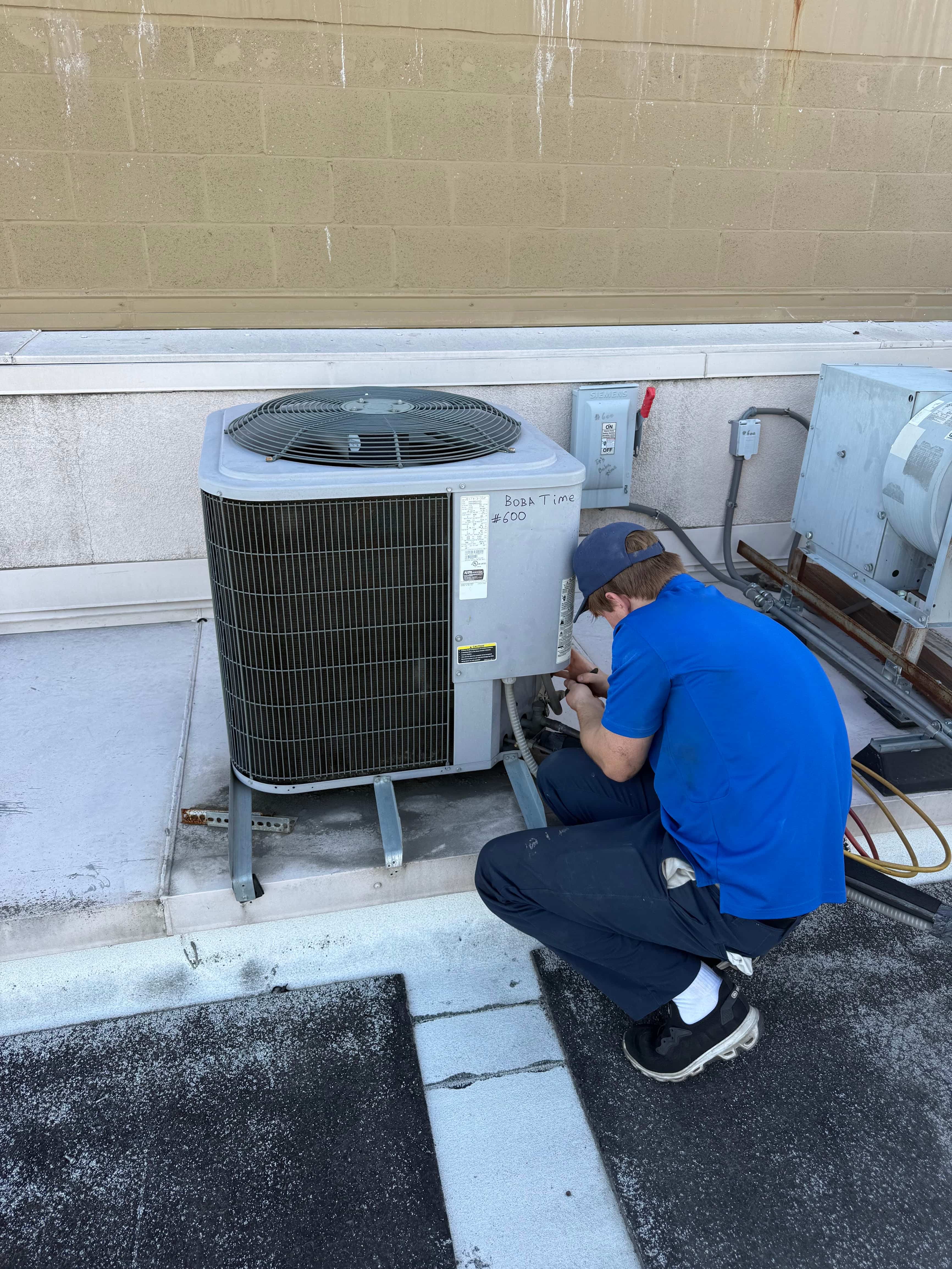
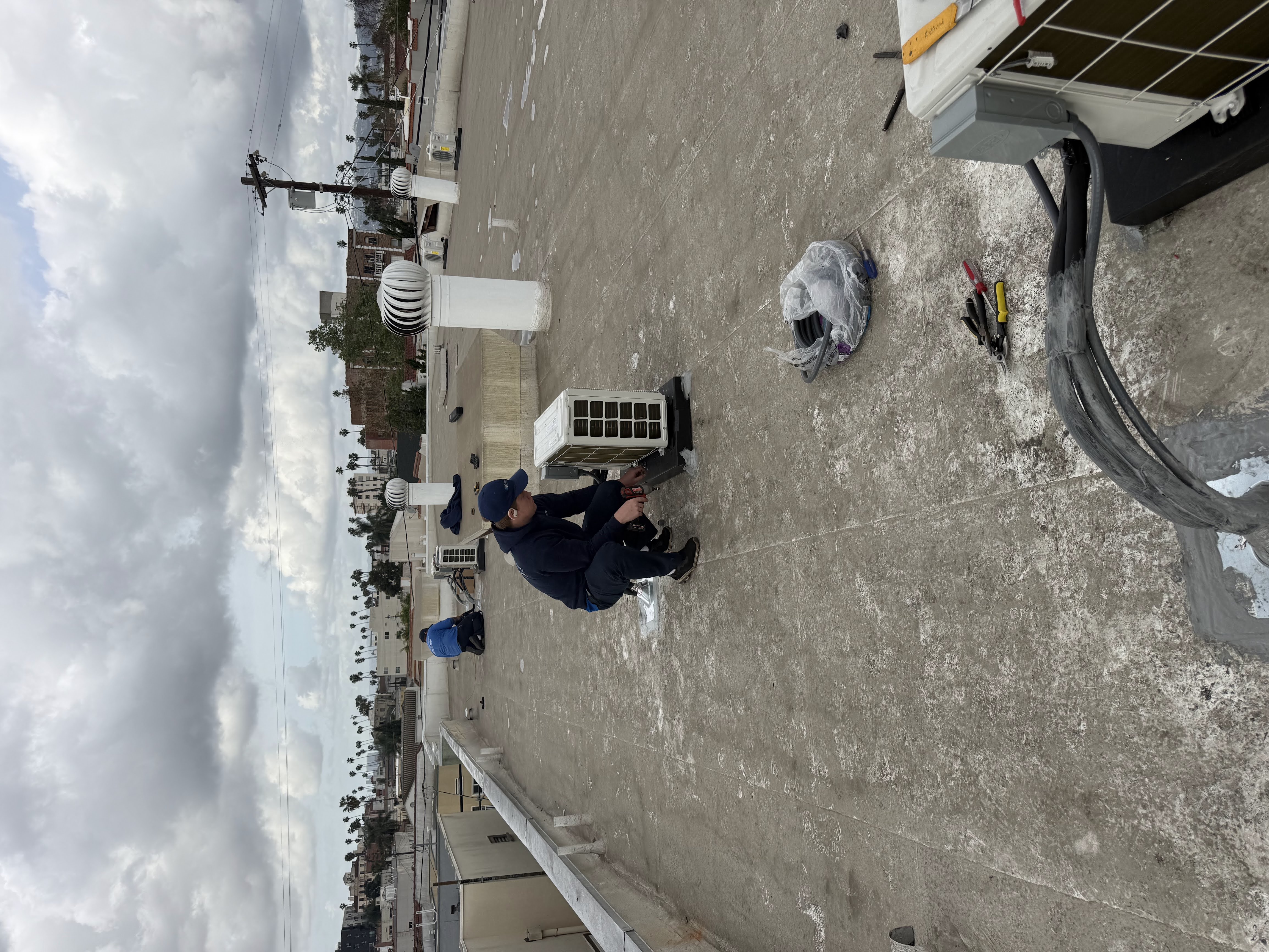
At LA Heating & Air Conditioning, we use a step-by-step process to locate leaks accurately.
Visual inspection - we look for obvious signs like oil stains near fittings, corrosion on copper lines, and physical damage to components. Refrigerant oil travels with the refrigerant, so oil spots often mark the leak location.
Electronic leak detection - we use electronic detectors that sense refrigerant in the air. These tools can find leaks too small to see. We trace along every joint, fitting, and connection until we find the source.
Pressure testing - we can pressurize the system with nitrogen to check for leaks. Pressure drop over time confirms a leak exists, and we can isolate sections to narrow down the location.
We repair leaks on systems 15 years old or younger. Once a unit passes 15 years, a repair rarely pays off, so replacing the whole system makes more financial sense for you, and a new unit may qualify for rebates. If your system is older, uses R-22 refrigerant, or has multiple leaks, we will say so directly. We always explain the cost of each option, tell you what we would do if it were our own home, and then you decide.
Refrigerant leak repair in Sherman OaksSee all our AC repair services in Los AngelesRefrigerant leak repair is not a quick fix. It is a multi-step process that takes time, skill, and expensive materials. Here is what goes into a proper leak repair and why the cost adds up.
1. We have to recover all the refrigerant from your system. Federal law requires this. We cannot just release refrigerant into the air. We use a recovery machine to pull it out and store it safely. This step alone takes 30 minutes to an hour.
2. We pressurize the system with nitrogen gas. This helps us find the leak. We use electronic leak detectors to trace every line, joint, and connection. Some leaks are obvious. Others are tiny pinholes that take real detective work to locate. Finding a hidden leak can take an hour or more.
3. Once we find the leak, we make the repair. Most repairs require brazing, which uses a high-temperature torch to seal copper tubing. This is skilled work. A bad braze job will just leak again.
4. After the repair, we have to pull a vacuum on the system. We use a vacuum pump to remove all air and moisture from the lines. We pull the system down to 500 microns or lower. This is critical. Any moisture left inside will damage your compressor and cause problems later.
5. We add refrigerant back to the exact correct charge. Too little and your system will not cool. Too much and you risk compressor damage. R-410A refrigerant costs $67 per pound. Most systems need 6 to 12 pounds.
6. We test everything. We check pressures, temperatures, and airflow. We make sure the system is cooling properly before we leave.
Add it all up and you have several hours of skilled labor, expensive refrigerant, nitrogen, and specialized leak-detection equipment. That is why a proper refrigerant leak repair, including the leak search, costs $1,960 (R-410A) to $2,140 (R-22). Shortcuts cost less, but they do not last.