Book a service call now for a 5-star experience.At LA Heating & Air Conditioning, we offer same day ac repair in Thousand Oaks, from Newbury Park to the hillside neighborhoods above the 101. We show up fast, figure out what's wrong, and fix it right. Most repairs get done the same day. When it hits 100 degrees in the Conejo Valley and your AC stops blowing cold, every hour matters. We make it a priority to get to you as soon as possible and fix your air conditioner ASAP.
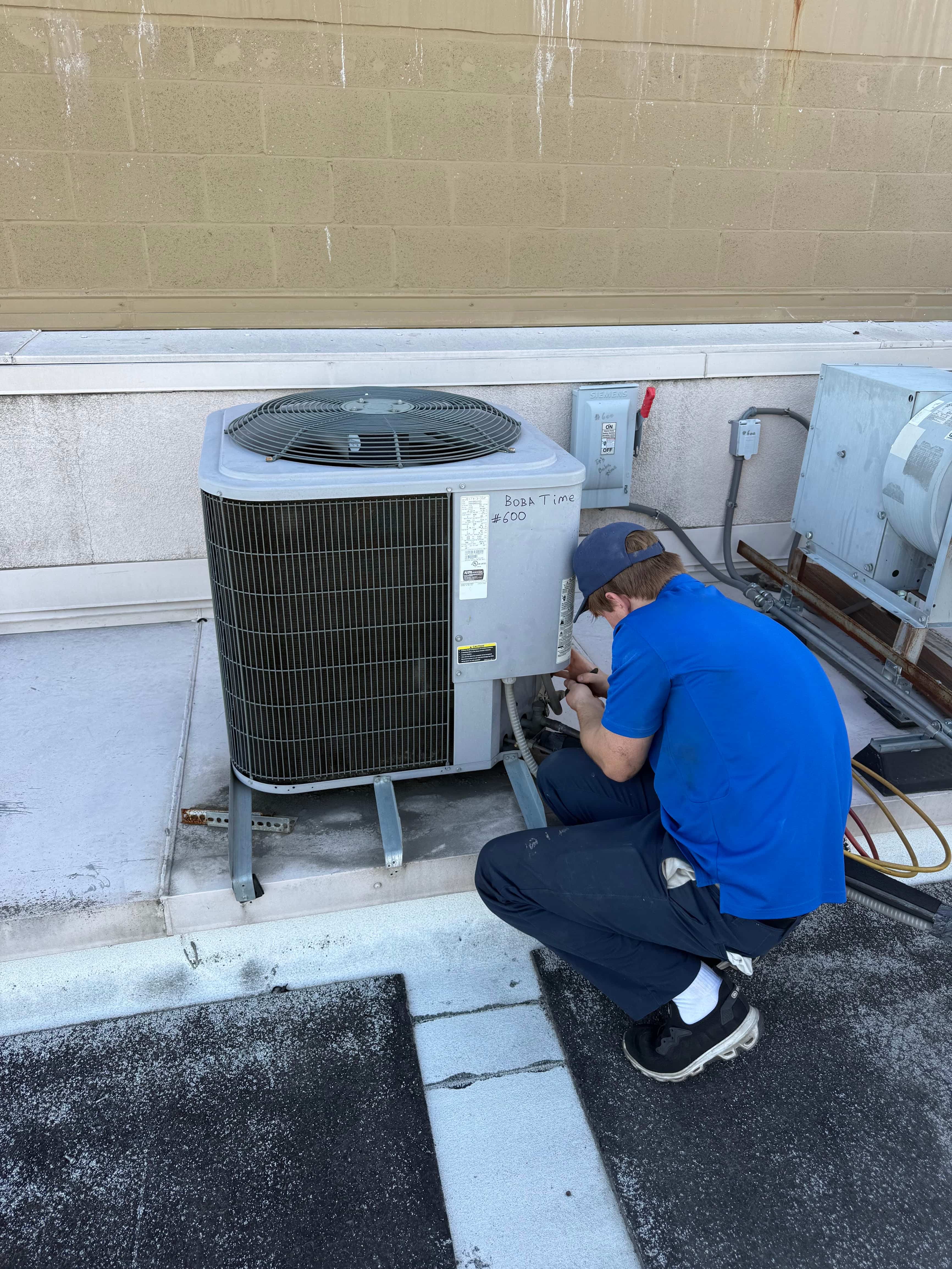


Air conditioners don't usually die without warning. They give signs first, weak airflow, warm air from the vents, strange noises, higher energy bills. If you've noticed any of these, something is wearing out.
The most common AC problem in Thousand Oaks are capacitor failures, refrigerant leaks, dirty coils, and bad contactors. Capacitors handle the startup surge for your compressor and fan motors, when they go, the system hums but won't kick on. Refrigerant leaks develop slowly at brazed joints and cause the evaporator coil to freeze. Dirty condenser coils force the compressor to work harder and eventually overheat. We see all of these weekly during the summer months.
Our trucks carry the parts for most common air conditioning repair jobs. That means we can usually finish the repair in one visit instead of ordering parts and coming back. Less waiting, less time sweating in a hot house.
We approach AC system repair by testing the whole setup, not just the part that seems broken. A unit that's low on refrigerant might have a leak at the evaporator coil inside the air handler. A compressor that keeps tripping off might be pulling too many amps because of a failing capacitor or restricted airflow. We trace the problem back to its source so you're not paying for repeat visits.
Your AC system includes more than just the outdoor unit. The indoor evaporator coil, blower motor, ductwork, thermostat, and electrical connections all have to work together. When one piece fails, the whole system suffers.
Homes in Thousand Oaks have a wide range of AC systems. Older homes near Lynn Ranch and downtown often have R-22 units that need special handling. We work on all of them.
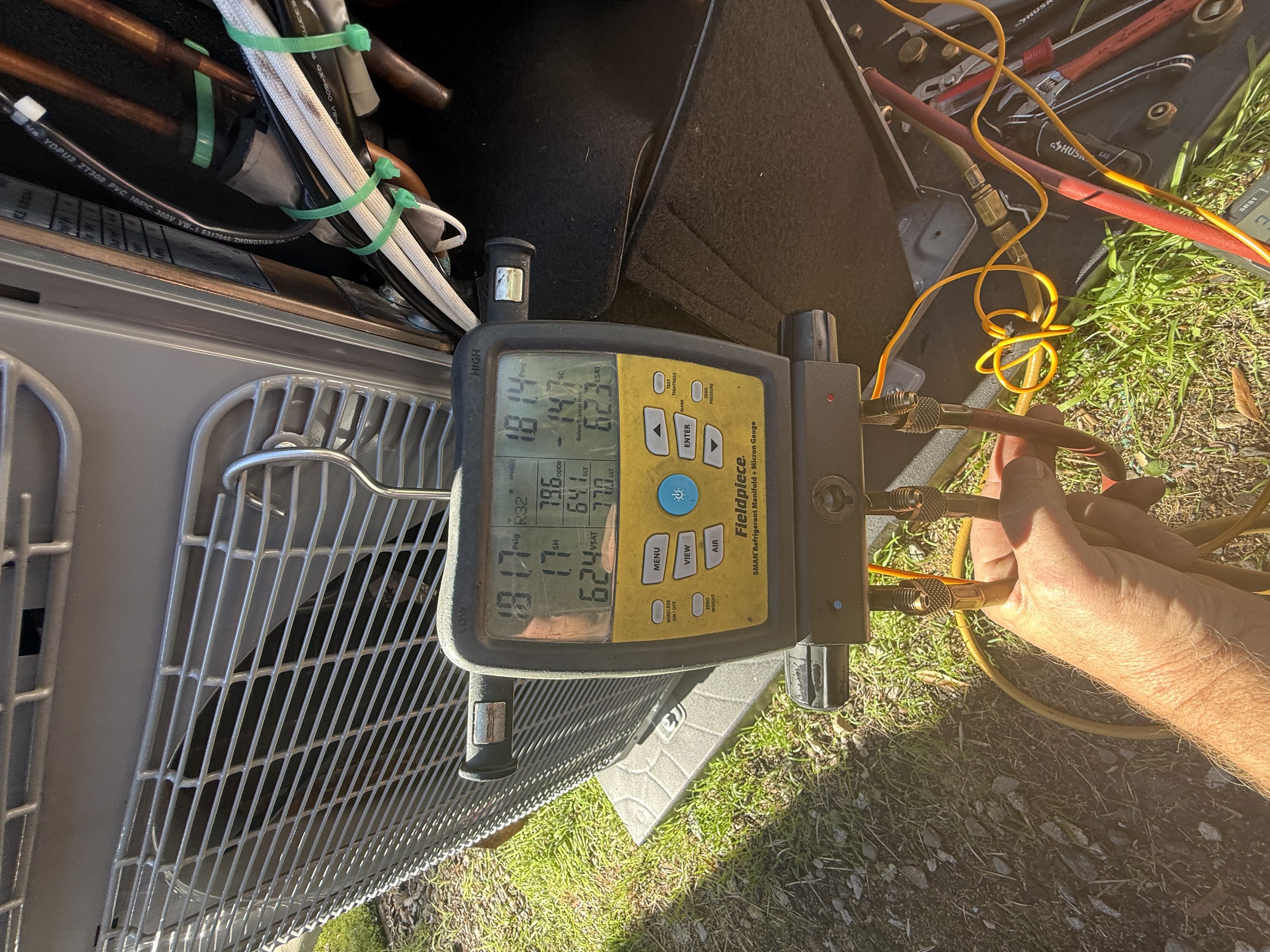
A broken commercial air conditioning system in a business isn't just uncomfortable, it costs you money. Customers leave, employees can't focus, and perishable inventory is at risk. You need someone who shows up fast and gets it working.
We provide commercial air conditioning repair for offices, retail stores, restaurants, and small industrial spaces throughout Thousand Oaks. Rooftop package units, split systems, multi-zone setups, we handle them all.
Sometimes a repair isn't worth it. If your unit is over 20 years old, needs a major part like a heat exchanger, or breaks down every winter, replacement might make more sense.
Sometimes the problem isn't just the AC, it's the whole system.
If your ductwork is leaking, your filter is dirty, or your air handler is failing, fixing the condenser alone won't solve the issue. We look at the big picture.
If your system is cooling some rooms but not others, running constantly without reaching the set temperature, or cycling on and off every few minutes, the issue might be deeper than a single failing part. That's when you need someone who can troubleshoot the entire HVAC system.
Full HVAC repair means testing airflow, checking duct connections, verifying thermostat operation, and inspecting both indoor and outdoor components. Thousand Oaks homes, especially two-story houses in Lang Ranch and North Ranch, often have duct runs through hot attics that leak conditioned air before it reaches the rooms. That makes the AC work overtime and still not keep up. We find these hidden problems and fix them.
Yes, you should definitely turn off you AC if it is not cooling. Even if the AC system is not working properly it is still pulling all the amps and power to run and sometimes even pulls more when it is not working properly.
Usually it costs about $200-$300 to replace a capacitor including the service call fee.
Short term it is always cheaper to repair an AC unit. Repairs on the very high end costs about $2000 - $3000, but these repairs are usually only temporary for an older unit that is starting to fail. Long term, if your unit is already 20+ years old, it is highly recommended to replace the unit for the benefit over time. Would you rather have 3 $500-$1000 repairs per year for the next couple years often failling when it is the hottest or coldest, which is common for older units when they start failling, or replacing your unit and having a new 10-year warranty with much higher efficiency and cost savings. A company policy is that we do not repair units 20+ years old because when one part fails then several other parts usually follow.
Common air conditioner problems include: dirty air filters, bad capacitors, low refrigerant, refrigerant leaks, and wiring issues.